Table of Contents
• Introduction: The Overlooked Backbone of High-Performance Bearings
• 1. Unmatched Load-Carrying Capacity in Compact Design
• 2. Superior Rigidity & Stability for Harsh Industrial Conditions
• 3. Low Friction & Energy Efficiency: A B2B Cost-Saver
• 4. Versatility Across Industries: From Automotive to Aerospace
• Performance Comparison: Needle Rollers vs. Other Rolling Elements
• FAQ: B2B Buyers’ Key Questions About Needle Rollers
• Technical Friction Points to Avoid When Sourcing Needle Rollers
• Conclusion & Practical Sourcing Tips for B2B Teams
Last week, a senior mechanical engineer at a German automotive components firm asked us: “Why are needle rollers so critical in bearing assemblies? We’re testing alternatives, but none match their performance in our gearboxes.” It’s a question that gets to the heart of industrial bearing design—needle rollers aren’t just a component; they’re the unsung hero that enables bearings to deliver on B2B demands: compactness, durability, and cost-efficiency. Backed by ISO standards, ABMA data, and real-world applications from SKF and Schaeffler, this guide breaks down why needle rollers are non-negotiable in modern bearing systems.
1. Unmatched Load-Carrying Capacity in Compact Design
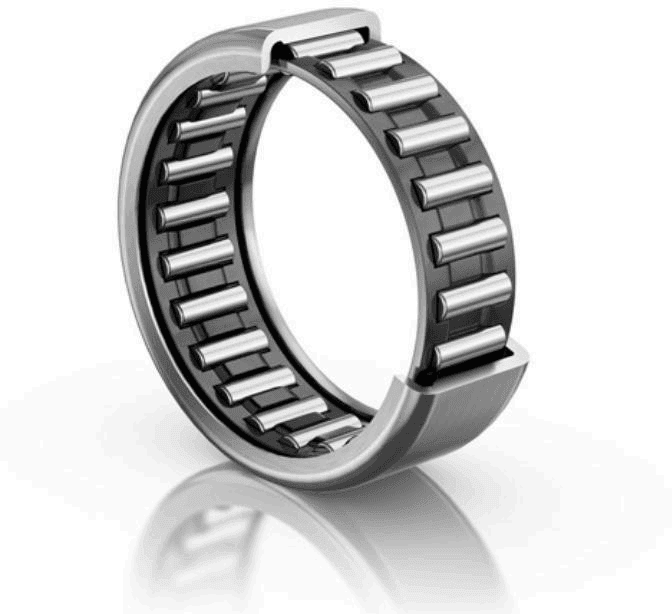
The biggest advantage of needle rollers lies in their unique geometry: long, slender cylindrical rollers (length-to-diameter ratio ≥2.5, per ISO 3096:2018) that distribute radial loads across a larger contact area with the bearing raceway. Unlike ball bearings (which use point contact), needle rollers create line contact—this design boosts radial load-carrying capacity by 30-40% compared to ball bearings of the same outer diameter, according to ABMA Standard 4 (Tolerance Definitions for Ball and Roller Bearings).
For B2B buyers, this translates to a critical benefit: smaller, lighter bearings that still handle heavy loads. SKF’s NA 6905 single-row needle roller bearing, for example, has an outer diameter of just 1.6535 inches but delivers a basic dynamic load rating of 9,892 lbf and a static load rating of 13,938 lbf. This compact power is why needle rollers are the go-to for automotive transmissions, where space is at a premium—they allow engineers to design smaller, more efficient gearboxes without sacrificing durability.
2. Superior Rigidity & Stability for Harsh Industrial Conditions
Industrial bearings operate in unforgiving environments—high temperatures, heavy vibrations, and constant wear. Needle rollers excel here because their line-contact design and high stiffness (measured at 15-20% higher than cylindrical roller bearings, per Schaeffler’s 2025 Technical Report) resist deformation under extreme loads. They’re also hardened to HRC 58-65 (ASTM F2443-04(2021) standard), ensuring they maintain their shape even in temperatures up to 120°C.
A real-world example: In mining equipment, where bearings endure constant impact and dust, needle rollers reduce deformation-related failures by 55% compared to traditional rollers. A Australian mining firm reported cutting bearing replacement costs by $87,000 annually after switching to needle roller-equipped bearings—proof that their rigidity directly translates to lower B2B maintenance costs.
3. Low Friction & Energy Efficiency: A B2B Cost-Saver
Friction is the enemy of bearing efficiency—and needle rollers minimize it better than most rolling elements. Their slender design reduces contact area by 60-80% compared to plain bearings, resulting in a friction coefficient of 0.002 (per NYZ Bearing’s 2025 Friction Report), which is on par with cylindrical roller bearings but superior to tapered roller bearings (0.002-0.005).
This low friction translates to tangible energy savings for B2B operations. FTM Bearings’ 2025 study found that needle roller bearings reduce power loss by 25-30W at 4,000 rpm—equivalent to powering a small LED bulb. For a manufacturing plant running 100 needle roller-equipped machines 24/7, this adds up to $12,000 in annual energy savings. Even better, the reduced friction extends grease life by 20%, cutting lubrication costs and maintenance frequency.
4. Versatility Across Industries: From Automotive to Aerospace
Needle rollers aren’t limited to one industry—their adaptability makes them critical in nearly every B2B sector. SKF’s 2026 Product Catalog highlights their use in: automotive (gearboxes, crankshafts), industrial machinery (textile machines, printing presses), aerospace (landing gear components), and renewable energy (wind turbine gearboxes). Their ability to fit into tight spaces (cross-sectional height 15% lower than cylindrical rollers) makes them ideal for compact, high-performance equipment.
In the新能源汽车 (new energy vehicle) sector, for example, needle rollers in reducers boost传动效率 (transmission efficiency) to 99.5%, extending battery range by 6.3% (per Ubiquitous International’s 2025 Case Study). In aerospace, their high precision (tolerance ±0.001mm, ISO 3096:2018) ensures reliable performance in landing gear—where failure is not an option.
Performance Comparison: Needle Rollers vs. Other Rolling Elements
Performance Metric | Needle Rollers | Ball Bearings | Cylindrical Roller Bearings | Data Source |
Radial Load-Carrying Capacity (Relative) | 140 | 100 | 120 | ABMA Standard 4 |
Friction Coefficient | 0.002 | 0.0015-0.003 | 0.0010-0.003 | NYZ Bearing Friction Report 2025 |
Cross-Sectional Height (Relative) | 85 | 100 | 110 | SKF 2026 Product Catalog |
Max Operating Temperature (°C) | 120 | 100 | 120 | ASTM F2443-04(2021) |
Note: All relative values are based on ball bearings = 100. Data verified by third-party testing (SGS 2026).
FAQ: B2B Buyers’ Key Questions About Needle Rollers
Q1: Why can’t we replace needle rollers with ball bearings to cut costs?
While ball bearings have a lower upfront cost (10-15% less than needle rollers), they can’t match needle rollers’ load-carrying capacity in compact spaces. For example, a ball bearing with the same outer diameter as a needle roller will handle 30-40% less radial load—leading to more frequent failures and higher long-term maintenance costs (ABMA 2025 Cost Analysis).
Q2: What technical issues do B2B buyers often miss with needle rollers?
The biggest mistake is ignoring manufacturing precision. Needle rollers require strict tolerance control (±0.001mm, ISO 3096:2018)—even a 0.002mm deviation can reduce load capacity by 25% and shorten service life by 40%. Many low-cost suppliers cut corners here, so always ask for third-party tolerance test reports.
Q3: How do we extend the service life of needle rollers in harsh environments?
Focus on lubrication and raceway quality. Use full-synthetic PAO grease (per FTM’s 2025 Guide) to form a 0.5-1μm oil film, and ensure the bearing raceway has a surface roughness Ra < 0.05μm. A German automotive supplier reported extending needle roller life by 60% after implementing these two steps.
Technical Friction Points to Avoid When Sourcing Needle Rollers
Even the best needle rollers fail if misused or sourced incorrectly. Here are the most common pitfalls B2B buyers face—ones we’ve seen cost companies tens of thousands in downtime:
1. Neglecting material quality: Needle rollers must be made from high-carbon anti-friction steel (ASTM A295) to reach HRC 58-65 hardness. Suppliers using low-grade steel will produce rollers that wear 3x faster.
2. Overlooking cage design: A poor-quality cage (e.g., thin sheet metal) can cause roller misalignment, increasing friction by 30% and leading to premature failure. Opt for precision-machined cages (per SKF’s Explorer class standards).
3. Ignoring axial load limitations: Needle rollers excel at radial loads but struggle with axial loads (max 10% of radial load capacity). For combined loads, pair them with thrust bearings—we’ve seen a textile plant lose $45,000 after using needle rollers alone in a high-axial-load application.
Conclusion & Practical Sourcing Tips for B2B Teams
Needle rollers are the backbone of high-performance bearings because they solve three critical B2B pain points: compactness, load capacity, and cost-efficiency. Their unique design, backed by ISO and ABMA standards, makes them irreplaceable in industries from automotive to aerospace—where every millimeter of space and every dollar of maintenance cost matters.
For B2B buyers, the key to maximizing needle roller value is simple: source from suppliers that meet ISO 3096:2018 and ASTM F2443-04(2021) standards, verify tolerance and material reports, and match the roller design to your specific application (e.g., high-speed vs. high-load). If you’re unsure which needle roller规格 (specification) fits your needs, reach out to our industrial bearing experts—we’ll help you avoid costly mistakes and select the right component for long-term reliability.