Table of Contents
Why Needle Roller Material and Hardness Actually Matter
The Industry Standard: 100Cr6 and Its Global Equivalents
Hardness: The HRC Range That Defines Performance
Beyond Standard Bearing Steel: Alternative Materials
Quantitative Comparison Table: Material Grades and Hardness
Surface Finish and Manufacturing Precision
Why Roller-End Profile Affects Stress Distribution
Frequently Asked Questions from Engineering and Procurement Teams
Summary & Next Steps
-------------------------------------------------------------------------------------------------------------------
Why Needle Roller Material and Hardness Actually Matter
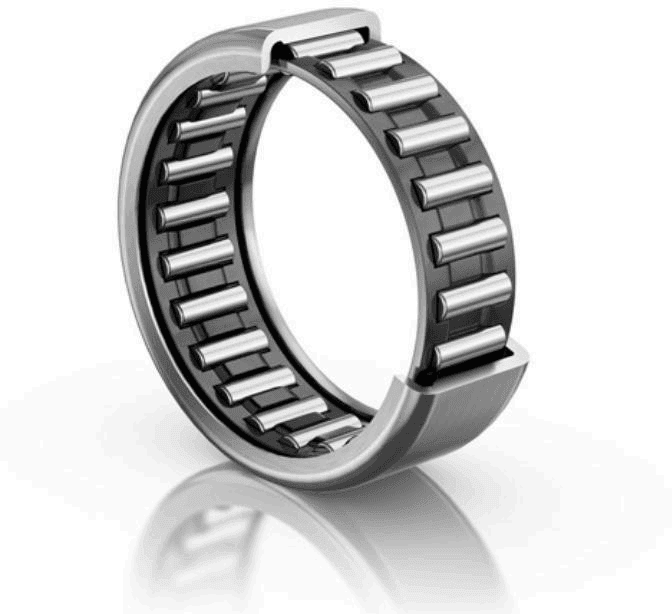
A needle roller looks simple—just a thin, long cylinder of steel. But that simplicity is deceptive. A typical needle roller bearing contains dozens or even hundreds of these small elements, and the failure of a single roller often means the entire assembly must be replaced.
Needle rollers are defined by their slenderness. The ratio of length to diameter typically falls between 3 and 11, with standard diameters ranging from 1mm to 6mm and lengths from 5mm to 50mm. Some precision applications reach up to 30mm in diameter. The fundamental principle is line contact between the roller and the raceway—not point contact as in ball bearings. This line contact distributes load across a larger area, which is why needle rollers can handle radial loads roughly three times higher than ball bearings of comparable dimensions.
Material selection determines whether that line contact remains stable under load or becomes a failure point. Too soft, and the roller deforms, creating uneven stress distribution and premature wear. Too hard, and the roller becomes brittle, prone to cracking under impact or fatigue cycling. The engineering challenge is hitting the optimal balance—and that balance is defined by international standards, heat treatment protocols, and micron-level manufacturing precision.
The Industry Standard: 100Cr6 and Its Global Equivalents
The overwhelming majority of needle rollers are manufactured from high-carbon chromium bearing steel. The most common grade goes by different names across global markets but shares nearly identical chemistry: 100Cr6 (ISO/DIN), GCr15 (China GB), SUJ2 (Japan JIS), and SAE 52100 (US ASTM).
According to ISO 683-17 and ASTM A295, the typical chemical composition is carbon 0.95–1.05%, chromium 1.40–1.65%, manganese 0.25–0.45%, and silicon 0.15–0.35%. Chromium serves two functions—it enhances hardenability during heat treatment and improves wear resistance through the formation of stable chromium carbides. The high carbon content (around 1%) provides the hardness necessary for rolling contact fatigue resistance.
A key point that often gets overlooked: standard delivery condition for this material is soft annealed, with a hardness of approximately HB170–207, which is machineable. The high hardness required for bearing service—HRC60 or above—comes entirely from subsequent quenching and tempering. This means the quality of the heat treatment process is as important as the material chemistry itself. If you source needle rollers from a supplier without in-house heat treatment capability or without certified process controls, you are taking a significant quality risk.
The corresponding standards are GB/T 18254-2016 (China), ASTM A295/A295M-14(2020) (USA), JIS G4805:2019 (Japan), and DIN 17230-1980 (Germany). Ask your supplier which standard they certify to, and request the mill test report for the specific lot. The differences between these standards are minor at the chemistry level, but the manufacturing tolerances and quality assurance protocols vary significantly.
Hardness: The HRC Range That Defines Performance
After proper quenching and tempering, needle rollers made from bearing steel achieve a core hardness of 60–65 HRC. Multiple sources confirm this range: bearing.com.cn specifies HRC62–65 for needle rollers after heat treatment, hongyuanproduce.com cites 60–64 HRC for AISI 52100, and Atlas Ball reports 58–65 HRC as the standard for chrome steel rollers, equivalent to 653–832 Hv10. DIN 5402-3 certified needle rollers (100Cr6, 1.3505) are hardened to 58–65 HRC.
For context, 60 HRC is approximately 653 Hv10, and 65 HRC is approximately 832 Hv10. The variation within this range reflects engineering trade-offs. Higher hardness (closer to 65 HRC) provides better wear resistance and longer service life under clean, well-lubricated conditions. Lower hardness (closer to 60 HRC) offers marginally better impact toughness and is more forgiving of contamination or marginal lubrication.
What happens outside this range? Below 58 HRC, the roller surface will deform under the Hertzian contact stresses typical in bearing applications—stresses that often exceed 2000 MPa locally. The roller flattens slightly at the contact area, increasing friction, generating heat, and accelerating wear. Above 66 HRC, the material becomes susceptible to brittle fracture. A single impact from a debris particle or a momentary overload can initiate a crack that propagates rapidly across the roller.
ISO 3096:1996 and DIN 5402-3 (Grade G2) specify the dimensional and geometrical characteristics for finished steel needle rollers used as rolling elements. Needle rollers manufactured to these specifications must meet strict tolerance requirements: roundness 1 μm, sorting tolerance 2 μm, and hardness maintained at 58–65 HRC.
A critical detail often missed: the raceway hardness requirement. When needle rollers run directly against a shaft or housing bore (full-complement arrangements without inner or outer rings), the raceway surface must also be hardened and ground. According to industry specifications, shafts used as raceways require hardness HRC58 or higher, achieved through quenching and precision grinding. If the raceway is softer than the needle roller, the raceway will wear preferentially—and worn raceways are far more expensive to repair than replacing a set of rollers.
Beyond Standard Bearing Steel: Alternative Materials
Standard bearing steel works perfectly for most applications, but certain environments demand alternatives.
Stainless steel needle rollers are specified when corrosion resistance is required. The most common grade is AISI 440C, a high-carbon martensitic stainless steel containing approximately 1.1% carbon and 17% chromium. After heat treatment, 440C achieves a hardness of 58–62 HRC—slightly lower than standard bearing steel but sufficient for most applications. The chromium content forms a passive oxide layer that protects against corrosion in marine environments, food processing equipment, and medical devices. One trade-off: 440C has lower fatigue strength than 52100, so applications with high cyclic loads may require derating.
Carburized bearing steel (e.g., G20CrNiMoA) offers a different design philosophy: a hard outer layer (typically 58–62 HRC) over a softer, tougher core. The case-hardening process involves carburizing or carbonitriding, followed by quenching. This combination provides wear resistance at the surface where contact occurs, combined with impact resistance in the core. Case-hardened needle rollers are commonly used in automotive transmissions, where sudden load changes and shock events are routine. The downside is that case depth must be carefully controlled—too shallow, and the hard layer wears through; too deep, and the core loses its toughness.
Ceramic needle rollers (silicon nitride Si₃N₄ or zirconia ZrO₂) represent the high-performance tier. Silicon nitride offers hardness of 15–18 GPa (roughly 1500–1700 HV, equivalent to 70–72 HRC)—significantly higher than steel. Density is approximately 3.2 g/cm³, about one-third that of steel, reducing inertial forces during high-speed operation. Ceramic rollers are chemically stable and corrosion-resistant. The major drawback is cost—ceramic needle rollers are significantly more expensive than steel equivalents, both in raw materials and complex manufacturing processes. They are typically reserved for high-end racing cars, precision machine tools, and aerospace applications where performance outweighs cost.
Plastic materials (PA66, PEEK) are used in special-purpose applications requiring lightweight construction, corrosion resistance, or electrical insulation. However, plastic needle rollers cannot match the load capacity or temperature resistance of metal alternatives.
Quantitative Comparison Table: Material Grades and Hardness
Material | Global Equivalent Grades | Hardness Range (HRC) | Corrosion Resistance | Relative Cost | Typical Applications |
Bearing Steel 100Cr6 | AISI 52100, GCr15, SUJ2, 1.3505 | 60–65 | Low | 1.0x (baseline) | Automotive engines, transmissions, industrial machinery |
Stainless Steel 440C | AISI 440C, SUS440C | 58–62 | High | 1.5–2.0x | Marine, food processing, medical devices |
Carburized Steel | G20CrNiMoA, SAE 8620 | 58–62 (case) | Low | 1.2–1.4x | Automotive transmissions, impact-loaded applications |
Silicon Nitride (Ceramic) | Si₃N₄ | ~70 (converted) | Excellent | 5–10x | High-speed spindles, racing, aerospace, machine tools |
Data sources: ASTM A295, JIS G4805, ISO 683-17, Hongyuan Bearing technical specifications, bearing-global.com material guides. Hardness values represent typical ranges after proper heat treatment; specific values vary by manufacturer and application.
Surface Finish and Manufacturing Precision
Hardness alone does not ensure performance. Surface finish is equally critical.
The surface finish of a needle roller is typically measured in Ra (arithmetic average roughness). For most general-purpose applications, Ra values of 0.2–0.4 micrometers are acceptable. However, high-precision applications require significantly smoother surfaces—Ra values as low as 0.025 to 0.1 micrometers for aerospace or high-end automotive engines.
Ultra-fine grinding can achieve surface roughness Ra ≤ 0.05 μm, reducing friction and operating noise. A superfine surface finish (Ra ≤ 0.1 μm) minimizes friction, reduces heat generation, and improves transmission efficiency.
The manufacturing process for high-precision needle rollers follows a strict sequence: material selection (high-carbon chromium steel such as SUJ2), initial forming through cold heading or cutting, quenching plus low-temperature tempering to achieve HRC60 or above, multi-pass centerless grinding, and 100% dimensional inspection using laser measuring instruments.
Tolerances on precision rollers can be extremely tight: diameter tolerance as tight as ±0.001mm (1 μm), roundness error below 0.5 μm, and full-length straightness ≤1 μm. These tolerances are not achievable without advanced centerless grinding equipment and rigorous process control.
The bearing steel retains its hardness up to 150°C, ensuring stable performance even under extreme operating temperatures. For applications exceeding this range, ceramic or specially formulated high-temperature steels may be required.
Why Roller-End Profile Affects Stress Distribution
This is a technical detail that many procurement specifications overlook entirely.
The edges of needle rollers are crowned (rounded) in order to prevent large stress concentrations. If a needle roller had sharp square ends, the contact pressure at the roller ends would spike dramatically—a phenomenon called edge loading. This stress concentration can reduce bearing life by 50% or more.
By putting a tightly controlled "crown" on the roller at the micrometer level, the loading of the bearing can actually be made more consistent over the length of the bearing. Crowned ends of needle rollers are able to withstand heavy loads and improve roundness compared to conventional products through high-precision machining methods.
The optimal crown drop (the amount of material removed at the roller ends) determines the pressure distribution between roller and raceway, as well as the capability and service life. The goal is to profile the needle rollers axially until the longitudinal pressure distribution has neither "edge effects" nor high-pressure concentration at the center part of contacts.
Some advanced designs use a logarithmic profile rather than a simple radius, which more closely approximates the ideal stress distribution under elastohydrodynamic lubrication conditions. If your application involves oscillatory motion or frequent start-stop cycles, pay close attention to the roller-end profile specification—it can mean the difference between a bearing that lasts five years and one that fails in six months.
Common roller-end profiles include flat ends (basic), spherical/convex ends (for improved alignment), logarithmic profile (for optimal stress distribution), and chamfered ends (for basic edge stress relief).
Frequently Asked Questions from Engineering and Procurement Teams
Q: How do I verify the hardness of needle rollers from a new supplier?
Request the heat treatment certificate and Rockwell hardness test reports. For critical applications, perform independent sample testing using a calibrated Rockwell hardness tester. Ensure the testing follows ASTM E18 (metallic materials) or ISO 6508-1. The hardness should be reported in HRC with a clear indication of the test location (surface or cross-section). Surface hardness after grinding may be slightly lower than core hardness due to localized heating—good suppliers control this.
Q: What is the difference between "through-hardened" and "case-hardened" needle rollers?
Through-hardened rollers (standard 100Cr6) have uniform hardness from surface to center, typically 60–65 HRC throughout. Case-hardened rollers have a hard outer layer (58–62 HRC) over a softer, tougher core. Through-hardened offers better wear resistance for pure rolling contact. Case-hardened offers better impact resistance for applications with shock loads. The difference is not small—it is a fundamental design choice.
Q: Can I use standard bearing steel needle rollers in a marine environment?
No. Standard bearing steel (100Cr6/GCr15/52100) has poor corrosion resistance. In marine environments, even trace amounts of salt will cause rust within weeks, leading to pitting, increased friction, and eventual seizure. Specify stainless steel (AISI 440C) or ceramic needle rollers for any application exposed to moisture, salt spray, or washdown chemicals.
Q: What is the service life difference between HRC60 and HRC65 needle rollers under clean conditions?
Under ideal lubrication and no contamination, HRC65 rollers will typically provide 30–40% longer service life than HRC60 rollers due to superior wear resistance. However, under contaminated conditions (presence of hard particles), higher hardness increases the risk of brittle fracture. The higher hardness material is less forgiving of debris. Evaluate your operating environment honestly before chasing maximum hardness.
Q: How do I specify needle rollers to ensure I get the correct material and hardness?
Three requirements. First, specify the exact material grade (e.g., "AISI 52100 bearing steel, heat treated to 62–64 HRC"). Second, require certification that the material meets the relevant standard (ASTM A295, JIS G4805, or DIN 17230). Third, request a sample for independent hardness verification before full production order. Do not accept vague descriptions like "bearing steel" or "high hardness." Get numbers and standards in writing.
Q: What is the typical cost difference between standard and precision-grade needle rollers?
Precision-grade rollers (diameter tolerance ±0.002mm, Ra ≤ 0.05μm) typically cost 30–50% more than standard-grade rollers (diameter tolerance ±0.005mm, Ra ≤ 0.2μm). The additional cost comes from extended grinding cycles, more frequent wheel dressing, and 100% inspection. However, for high-speed applications or assemblies with tight internal clearances, the premium is justified—the cost of a seized bearing due to oversized rollers is far higher.
Q: What is the surface finish requirement for a bearing needle roller pin?
For most general-purpose applications, Ra 0.2–0.4 μm is acceptable. For high-precision applications (aerospace, high-end automotive), Ra 0.025–0.1 μm is required. The smooth surface reduces friction, ensures consistent lubrication film formation, and extends service life.
Summary & Next Steps
Selecting the right needle roller comes down to matching three parameters to your application: material grade (standard bearing steel for general use, stainless for corrosion resistance, carburized for impact loads, ceramic for high speed), hardness (60–65 HRC for standard applications), and surface finish (Ra ≤ 0.2 μm for most uses, tighter for precision).
The 100Cr6 family of bearing steels remains the industry standard for good reason. It offers an optimal balance of hardness, wear resistance, and fatigue strength. Alternative materials serve specific niches—not as replacements across the board.