Table of Contents
Introduction: High-Precision Needle Rollers — The Core Element of Precision Motion
Understanding High-Precision Needle Rollers: Standards and Geometry
Material Comparison: Bearing Steel vs. Silicon Nitride Ceramic
Tolerance Grade Deep Dive: G2, G3, and G5 Differences
Load Capacity and Fatigue Life: Contact Stress and L10 Life
Heat Treatment Comparison: Through Hardening vs. Case Carburizing
End Geometry: Flat Ends, Round Ends, and Crowned Profiles
Surface Quality: The Impact of Roughness on Lubrication and Wear
High-Speed Performance: Centrifugal Force and DN Value Limits
Application Fit: Automotive, Industrial Gearboxes, Machine Tools, and Aerospace
Cost Structure Analysis: Purchase Price vs. Lifecycle Value
Summary Comparison Table: High-Precision Needle Roller Selection Parameters
Industry Case Study: Precision Gearbox Manufacturer Extends Product Life Through Needle Roller Upgrade
FAQ: Common Questions About High-Precision Needle Roller Selection
Conclusion: Matching High-Precision Needle Rollers to Application Requirements
Consultation CTA
1. Introduction: High-Precision Needle Rollers — The Core Element of Precision Motion
In precision mechanical transmission systems, high-precision needle rollers are the fundamental elements that determine bearing performance, rotational accuracy, and service life. From planetary gear shafts in automotive transmissions to flexible bearings in industrial robot reducers, from accessory drives in aerospace engines to spindle supports in precision machine tools, high-precision needle rollers serve as rolling elements, carrying radial loads and transmitting rotational motion.
However, a needle roller—seemingly just a precisely machined small cylinder—embodies sophisticated technology in micron-level diameter tolerances, nanometer-level surface finishes, and strictly controlled material microstructures. A G2-grade needle roller with a 3mm diameter has a diameter tolerance band of only 2 microns, roughly one-thirtieth the diameter of a human hair. Selecting the wrong tolerance grade or material translates into increased vibration and noise, drastically reduced fatigue life, and compromised overall system reliability.
According to the latest study by Global Info Research, the global needle roller bearing market was valued at approximately US$4.407 billion in 2024 and is forecast to reach US$5.312 billion by 2031, growing at a CAGR of 2.7%. The automotive sector represents the largest application segment, with a market size of US$3.0 billion in 2024, expected to reach US$4.1 billion by 2030 at a CAGR of 5.5%. Behind this growth trajectory lies sustained demand for higher precision and longer service life in needle rollers.
This guide provides a systematic comparison of mainstream high-precision needle roller options based on DIN 5402, ISO 3096, ISO 12297, and related international standards, empowering bearing design engineers and procurement decision-makers to make precise technical selections.
2. Understanding High-Precision Needle Rollers: Standards and Geometry
The international standards framework for high-precision needle rollers primarily includes DIN 5402-3 (German Industrial Standard), ISO 3096 (International Organization for Standardization), and ISO 12297 (cylindrical roller dimensions and tolerances). These standards define dimensional series, geometric tolerances, and accuracy classifications.
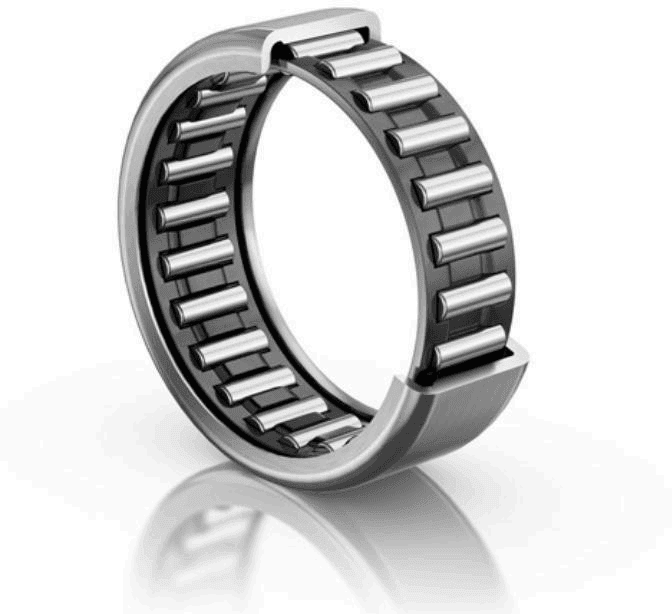
The geometric characteristics of needle rollers define their application boundaries. Standard needle rollers typically range from 1 to 12 mm in diameter and 3 to 100 mm in length, with a length-to-diameter ratio generally between 3 and 11. This high aspect ratio gives needle roller bearings their unique advantage of providing high load capacity within limited radial space.
Needle roller end configurations include three primary types: flat ends, suitable for applications with tight axial space constraints; round ends, which reduce frictional stress concentration at the contact with flanges; and flat and machined ends, providing higher end-face precision.
High-precision needle rollers are typically manufactured from 100Cr6 (AISI 52100/GCr15) rolling bearing steel, hardened to 58-65 HRC (670-840 HV) . This hardness range ensures the needle rollers do not undergo plastic deformation under high contact stress with raceways while maintaining sufficient toughness to resist impact loads.
3. Material Comparison: Bearing Steel vs. Silicon Nitride Ceramic
Comparison Dimension | Bearing Steel (100Cr6/AISI 52100) | Silicon Nitride Ceramic (Si₃N₄) |
Density (g/cm³) | 7.85 | 3.20 - 3.25 (~40% weight) |
Elastic Modulus (GPa) | 208 | 320 (~1.5×) |
Hardness (HV) | 700 - 840 (58-65 HRC) | 1500 - 1800 |
Thermal Expansion Coeff. (10⁻⁶/K) | 11 | 3.2 (~1/4×) |
Maximum Operating Temp (°C) | 120 (hardness decreases) | 800 - 1200 |
Electrical Conductivity | Conductive | Insulating |
Corrosion Resistance | Moderate (requires protection) | Excellent |
Fracture Toughness (MN/m³/²) | 25 | 6 |
Relative Cost Index | 1 (Baseline) | 15 - 25 |
Applicable Standards | DIN 5402 / ISO 3096 | ASTM F2730 / ISO 12297-2 |
Bearing steel needle rollers represent the most widely used baseline choice. 100Cr6 (AISI 52100) high-carbon chromium bearing steel is the industry standard due to its excellent hardness, wear resistance, and fatigue strength. After proper heat treatment, its microstructure consists of fine tempered martensite with uniformly distributed fine carbides, providing outstanding resistance to contact fatigue.
Silicon nitride ceramic needle rollers represent the cutting edge for high-performance applications. With a density of only about 40% of bearing steel, centrifugal force during high-speed rotation is dramatically reduced. The elastic modulus is approximately 1.5 times that of bearing steel, resulting in smaller elastic deformation and higher stiffness under equivalent loads. The thermal expansion coefficient is roughly one-quarter that of bearing steel, allowing minimal dimensional change in environments with large temperature fluctuations.
Another key advantage of silicon nitride is electrical insulation. In variable-frequency drive motors, wind turbine generators, and rail traction motors, bearing steel needle rollers can suffer from electrical pitting caused by shaft currents, creating microscopic craters on raceways and roller surfaces that ultimately lead to premature failure. The inherently electrically insulating nature of ceramic needle rollers completely eliminates this risk.
However, ceramic needle rollers exhibit significantly lower fracture toughness than bearing steel, making them more susceptible to brittle fracture under impact loads or improper installation. Additionally, manufacturing costs are substantially higher than steel rollers, making them suitable primarily for high-end applications where performance requirements outweigh cost considerations.
4. Tolerance Grade Deep Dive: G2, G3, and G5 Differences
Tolerance grade is the core metric for evaluating high-precision needle roller quality. Per DIN 5402-3 and ISO 3096 standards, needle rollers are classified into three primary grades based on diameter sorting tolerance: G2, G3, and G5.
Tolerance Grade | G2 | G3 | G5 |
Diameter Sorting Tolerance (μm) | 2 | 3 | 5 |
Diameter Tolerance Band (μm) | 0/-10 (typical) | 0/-10 (typical) | 0/-10 (typical) |
Roundness Tolerance (μm) | 1 | - | 2.5 |
Surface Roughness Ra (μm) | ≤0.2 | ≤0.2 | ≤0.25 |
Length Tolerance | h13 | h13 | h13 |
G2 grade is the highest precision level, with a diameter sorting tolerance of only 2 microns. This means the diameter variation among rollers within the same sorted group does not exceed 2 microns, ensuring uniform load distribution in multi-roller bearings. G2 needle rollers have a roundness tolerance controlled within 1 micron and surface roughness Ra not exceeding 0.2 microns. These rollers are used in precision machine tool spindle bearings, aerospace engine accessories, and high-end measuring instruments.
G3 grade has a diameter sorting tolerance of 3 microns. While not formally included in the DIN 5402 standard, it is widely used as an industry-accepted grade. It offers a balance between economy and precision between G2 and G5, suitable for most industrial gearboxes, automotive transmissions, and general machinery.
G5 grade has a diameter sorting tolerance of 5 microns and roundness tolerance of 2.5 microns, representing the standard precision level. It is appropriate for applications with lower precision requirements, such as agricultural machinery bearings, conveyor equipment, and general industrial equipment.
Tolerance grade selection directly impacts bearing operating performance. Higher precision grades translate to lower vibration, reduced noise, and more uniform load distribution, thereby extending bearing fatigue life.
5. Load Capacity and Fatigue Life: Contact Stress and L10 Life
The load-carrying capacity of high-precision needle rollers derives from the line contact geometry between the rollers and raceways. Compared to point contact in ball bearings, line contact distributes the load over a wider contact band, significantly enhancing radial load capacity within equivalent dimensions.
The dynamic load rating (Cr) and static load rating (Cor) of a needle roller bearing are determined by roller diameter, quantity, effective contact length, and material hardness. With finite element analysis (FEA) optimized roller profiles, contact stress distribution becomes more uniform, and L10 fatigue life can be extended to over 60,000 hours per ISO 281 standard.
Fatigue is the predominant failure mode for needle rollers. During each rotation, rollers experience cyclic loading and unloading, generating subsurface cyclic shear stresses. As cycles accumulate, subsurface micro-defects gradually propagate, eventually leading to material spalling. Resistance to this process depends on material cleanliness—vacuum degassed bearing steel significantly improves rolling fatigue life.
For applications subjected to shock loads (e.g., construction machinery, mining equipment), case-carburized needle rollers offer extended fatigue resistance due to their tough core. Under shock loading conditions, case-carburized steel rollers can achieve 40% longer life than through-hardened steel rollers.
6. Heat Treatment Comparison: Through Hardening vs. Case Carburizing
Heat treatment is the critical process determining the final performance of high-precision needle rollers. Two mainstream processes—through hardening and case carburizing—are suited to different operating conditions.
Through hardening involves heating high-carbon steel (such as 100Cr6) to austenitizing temperature (approximately 840-860°C), followed by rapid quenching to obtain martensitic structure, then low-temperature tempering to adjust hardness and toughness. After through hardening, the needle roller has uniform hardness from surface to core, typically achieving 58-65 HRC. This process is simple and cost-effective, suitable for most conventional applications.
However, through-hardened needle rollers are uniformly hard and brittle from surface to core, making them susceptible to fracture under impact loads. The fracture toughness of high-carbon martensite is limited; once a crack initiates, it may propagate rapidly to cause complete failure.
Case carburizing involves placing low-carbon steel in a carbon-rich atmosphere at elevated temperature (880-980°C), allowing carbon atoms to diffuse into the surface forming a high-carbon layer, followed by quenching to achieve a hard, wear-resistant surface while the core remains in a low-carbon, tough state. This "hard exterior, tough interior" structure gives case-carburized rollers superior impact and fracture resistance.
The advantages of case-carburized rollers are particularly evident under shock loads and misalignment conditions. The tough core absorbs impact energy and inhibits surface crack propagation inward. Research indicates that under identical shock loading conditions, case-carburized rollers can achieve 40% longer life than through-hardened rollers.
The key consideration in process selection: choose through hardening for steady, uniform loading—it offers good economy; choose case carburizing for shock loads or misalignment—it provides superior reliability and extended life.
7. End Geometry: Flat Ends, Round Ends, and Crowned Profiles
The end geometry of needle rollers significantly influences bearing stress distribution and operational smoothness.
Flat-end needle rollers have end faces perpendicular to the axis. They are simple to manufacture and suitable for applications with tight axial space constraints and no axial flange contact. However, when contacting flanges, flat ends create stress concentration at the edges, accelerating wear.
Round-end needle rollers feature a radiused transition at the ends, reducing edge stress concentration at flange contact and minimizing friction and wear. This is the preferred configuration for most standard applications.
Crowned profiles represent a higher level of geometric optimization. The cylindrical surface of the roller is slightly relieved near the ends (logarithmic crowning) to eliminate end stress concentration—a phenomenon that can lead to premature fatigue spalling at raceway edges with straight-profile rollers. Crowned rollers achieve more uniform contact stress distribution under heavy loads, significantly extending fatigue life.
8. Surface Quality: The Impact of Roughness on Lubrication and Wear
The surface roughness of high-precision needle rollers directly influences lubrication regime and wear rate.
Surface roughness Ra for G2 and G3 grade rollers is typically controlled within 0.2 microns, and for G5 grade within 0.25 microns. This level of surface finish ensures the formation of a complete oil film under elastohydrodynamic lubrication (EHL) conditions, fully separating the roller from the raceway and minimizing direct metal-to-metal contact.
For every 0.1 micron reduction in surface roughness, bearing friction torque can decrease by 5% to 10%, with corresponding reductions in operating noise. For high-speed precision spindles, lower surface roughness translates to reduced vibration and higher rotational accuracy.
Lapping is the key process for achieving mirror-grade surfaces. Through precision lapping, roller cylindricity, roundness, and surface roughness are simultaneously optimized. Ceramic rollers, processed via hot isostatic pressing (HIP) sintering combined with precision lapping, can achieve surface roughness below 0.1 microns.
9. High-Speed Performance: Centrifugal Force and DN Value Limits
At high rotational speeds, the centrifugal force generated by the roller's own mass becomes a critical design-limiting factor.
For steel needle rollers, when the DN value (bearing bore diameter in mm × rotational speed in rpm) exceeds approximately 500,000, centrifugal force begins to significantly affect the contact load between the roller and the outer raceway. Excessive centrifugal force leads to increased outer raceway contact stress, elevated heat generation, and lubrication failure.
Silicon nitride ceramic needle rollers possess inherent advantages in high-speed applications. With a density of only about 40% of bearing steel, centrifugal force at equivalent speeds is reduced by approximately 60%. This characteristic enables ceramic roller bearings to accommodate extreme DN values of 1.8 to 2.2 million, far exceeding the limits of steel rollers.
The reduced centrifugal force of ceramic rollers also brings an indirect benefit: it allows higher speeds without generating excessive heat. In machine tool motorized spindles, turbochargers, and high-speed centrifuges, this advantage is particularly pronounced.
10. Application Fit: Automotive, Industrial Gearboxes, Machine Tools, and Aerospace
Different applications impose distinct performance priorities on high-precision needle rollers.
Automotive transmissions represent the largest market for needle rollers. In planetary gear sets, differential pinions, and steering systems, needle roller bearings must provide high load capacity and long life within confined spaces. G3-grade bearing steel needle rollers (through-hardened or case-carburized) dominate this sector. With the trend toward electrification, motor shaft current issues are driving gradual adoption of ceramic needle rollers in traction motor bearings.
Industrial gearboxes and construction machinery face heavy loads, shock, and harsh conditions. Case-carburized G3-grade needle rollers are the preferred choice due to their core toughness and impact resistance. Crowned profiles are particularly critical in these applications to mitigate edge stress concentration caused by misalignment.
Precision machine tool spindles demand the highest rotational accuracy and lowest vibration levels. G2-grade high-precision needle rollers with precision-ground surfaces are the minimum threshold in this domain. In high-speed machining centers, silicon nitride ceramic needle rollers are progressively replacing steel rollers due to their low centrifugal force and high stiffness.
Aerospace imposes the most stringent requirements for reliability, weight, and extreme temperature adaptability. G2-grade needle rollers are standard. In engine accessories and flight control systems, ceramic needle rollers offer unmatched advantages in lightweight design (approximately 40% weight reduction), high-temperature capability, and electrical insulation.
11. Cost Structure Analysis: Purchase Price vs. Lifecycle Value
Selecting high-precision needle rollers requires finding the optimal balance between initial purchase cost and total lifecycle value.
Bearing steel needle rollers range in unit cost from a few cents for G5 grade to several dollars for G2 grade. 100Cr6 (AISI 52100) is a mature bearing steel with abundant raw material supply and well-established processing technology, representing the lowest-cost option. In high-volume production, unit costs can be maintained at very low levels.
Silicon nitride ceramic needle rollers are significantly more expensive to manufacture—approximately 15 to 25 times the cost of equivalent steel rollers. The high cost stems from complex multi-step processes including raw powder preparation, hot isostatic pressing (HIP) sintering, and precision lapping.
However, in specific applications, ceramic needle rollers deliver long-term economic returns through extended maintenance intervals, reduced downtime losses, and improved system efficiency. For example, in wind turbine gearboxes, ceramic needle rollers eliminate electrical pitting risks, avoiding costly up-tower replacements costing tens of thousands of dollars. In semiconductor manufacturing equipment, the self-lubricating properties of ceramic rollers avoid cleanroom contamination.
For most industrial applications, G3-grade bearing steel needle rollers provide the optimal balance of precision and cost. Ceramic needle rollers are justified only when extreme speed, high temperature, severe corrosion, or electrical insulation become mandatory requirements.
12. Summary Comparison Table: High-Precision Needle Roller Selection Parameters
Selection Parameter | Bearing Steel G2 | Bearing Steel G3 | Bearing Steel G5 | Ceramic G2/G3 |
Diameter Sorting Tol. (μm) | 2 | 3 | 5 | 2/3 |
Material | 100Cr6/AISI 52100 | 100Cr6/AISI 52100 | 100Cr6/AISI 52100 | Si₃N₄ |
Hardness (HV) | 700-840 | 700-840 | 700-840 | 1500-1800 |
Density (g/cm³) | 7.85 | 7.85 | 7.85 | 3.20-3.25 |
Surface Roughness Ra (μm) | ≤0.2 | ≤0.2 | ≤0.25 | ≤0.1 |
Max Operating Temp (°C) | 120 | 120 | 120 | 800-1200 |
DN Value Limit | ~500,000 | ~500,000 | ~500,000 | >1.8 million |
Electrical Insulation | No | No | No | Yes |
Relative Cost Index | Medium | Low-Medium (Baseline) | Low | 15-25 |
Typical Applications | Machine tools, aerospace | Automotive, industrial gearboxes | Agricultural, conveying | High-speed spindles, wind power, semiconductor |
13. Industry Case Study: Precision Gearbox Manufacturer Extends Product Life Through Needle Roller Upgrade
Project Background:
A precision planetary gearbox manufacturer based in China supplies products widely used in industrial robots and automation equipment. The core rolling elements in its RV reducers were G3-grade bearing steel needle rollers. Under continuous operation at end-customer sites, some units exhibited increased vibration and precision degradation after approximately 8,000 hours of service. Teardown analysis revealed early fatigue spalling on needle roller surfaces.
Comparative Analysis and Solution Selection:
The engineering team evaluated three improvement options:
Option One: Retain G3-grade rollers and optimize lubrication. No cost increase, but would not fundamentally address contact fatigue.
Option Two: Upgrade to G2-grade high-precision needle rollers, narrowing diameter sorting tolerance to improve load distribution uniformity. Higher precision would improve load sharing, but unit roller cost would increase by approximately 40%.
Option Three: Adopt case-carburized needle rollers while maintaining G3 tolerance grade, utilizing compressive residual stress in the carburized layer to inhibit fatigue crack propagation.
Final Decision and Implemented Results:
The engineering team selected a combination of Options Two and Three: upgrading to case-carburized G2-grade needle rollers. The rationale: G2 precision improved load distribution among multiple rollers, while case carburizing provided superior fatigue resistance—the two effects synergistically enhanced performance.
After the upgrade, L10 life under identical operating conditions extended from approximately 8,000 hours to over 14,000 hours, an improvement exceeding 75%. The incremental cost represented less than 2% of the total gearbox cost, yet customer complaints decreased by 60% and after-sales repair costs dropped by over 50%. This case demonstrates that in high-precision transmission systems, upgrading high-precision needle roller tolerance grade and heat treatment yields significant product reliability improvements at minimal incremental cost.
14. FAQ: Common Questions About High-Precision Needle Roller Selection
Q1: How significant is the practical difference between G2 and G3 needle rollers?
A: G2-grade rollers have a diameter sorting tolerance of 2 microns, while G3-grade is 3 microns. This micron-level difference has a measurable impact on load distribution in multi-roller bearings. Studies show that when roller diameter variation is reduced from 3 microns to 2 microns, the maximum load on the most heavily loaded roller can decrease by approximately 15% to 20%, directly extending bearing fatigue life. For high-speed, high-precision applications (e.g., machine tool spindles, robot RV reducers), G2 provides necessary precision assurance; for general industrial applications, G3 is sufficient.
Q2: Can ceramic needle rollers directly replace steel needle rollers?
A: Direct simple replacement is not recommended. Although ceramic needle rollers can be machined to the same dimensions as steel rollers, several factors must be considered: ceramic's elastic modulus is 50% higher than steel, meaning contact stress is higher under equivalent load, requiring raceway strength recalculation; ceramic's lower density alters centrifugal load distribution at high speeds; the differing thermal expansion coefficients between ceramic and steel may cause clearance changes during temperature fluctuations. Ceramic roller bearings should be validated as complete systems.
Q3: How to determine whether needle rollers require through hardening or case carburizing?
A: The primary considerations are load type and application environment. Through hardening is suitable for steady rotation and uniform loading—it offers good economy. Case carburizing is required for shock loads, vibration, and misalignment conditions (e.g., construction machinery, mining equipment, automotive universal joints). A practical guideline: if the bearing location experiences frequent start-stop cycles, direction reversals, or impact loads, case carburizing is preferred.
Q4: What are the limitations on needle roller length-to-diameter ratio?
A: Standard needle rollers typically have length-to-diameter ratios between 3 and 11. If the ratio is too small (<3), the advantages of needle rollers cannot be fully realized, and short cylindrical rollers should be considered instead. If the ratio is too large (>11), roller deflection increases, leading to end stress concentration, misalignment, and increased tendency for roller skewing during operation. For extremely slender applications, cage-guided designs are required to ensure parallel roller guidance.
15. Conclusion: Matching High-Precision Needle Rollers to Application Requirements
Selecting high-precision needle rollers involves systematic trade-offs among material systems, tolerance grades, heat treatment processes, and geometric design.
For high-volume industrial applications (automotive, general machinery), G3-grade bearing steel needle rollers provide the optimal balance of precision, cost, and reliability. Through hardening suits steady loading conditions; case carburizing is recommended for shock environments.
For precision and high-speed applications (machine tools, robotics, aerospace), G2-grade high-precision needle rollers are the necessary threshold for ensuring rotational accuracy and low vibration. When speeds enter the ultra-high DN value regime, silicon nitride ceramic needle rollers offer unmatched advantages in low centrifugal force and high stiffness.
For special environments (severe corrosion, extreme temperatures, electrical insulation requirements), ceramic needle rollers become the only viable choice due to their intrinsic material properties. Although the initial investment is high, the lifecycle value in specific applications far exceeds the price premium.
Ultimately, a carefully selected set of high-precision needle rollers should, with the appropriate tolerance grade and material system matched to the operating conditions, deliver reliable load support and precise rotational guidance throughout the target service life.
16. Get Expert Support for High-Precision Needle Roller Selection
Selecting high-precision needle rollers requires interdisciplinary knowledge spanning materials science, precision manufacturing, heat treatment processes, and application engineering. Whether for standard product selection, custom design, or failure analysis, expert technical support can help you optimize solutions and shorten development cycles.
Contact our precision rolling elements technical team for application-specific high-precision needle roller selection recommendations and sample support.
References and Data Sources
DIN 5402-3:2012, "Rolling bearings — Parts of rolling bearings — Part 3: Needle rollers."
ISO 3096:1996, "Rolling bearings — Needle rollers — Dimensions and tolerances."
ISO 12297-1:2021, "Rolling bearings — Cylindrical rollers — Part 1: Boundary dimensions, geometrical product specifications (GPS) and tolerance values for steel rollers."
ISO 12297-2:2018, "Rolling bearings — Cylindrical rollers — Part 2: Boundary dimensions, geometrical product specifications (GPS) and tolerance values for ceramic rollers."
ASTM F2730/F2730M, "Standard Specification for Silicon Nitride Cylindrical Bearing Rollers."
Global Info Research, "Global Needle Roller Bearing Market 2025-2031," 2025.
Global Industry Analysts, Inc., "Automotive Needle Roller Bearings — Global Strategic Business Report," 2025.
Schaeffler Technologies, "Rolling Elements — Technical Principles."
ZYS Bearing, "Ideal material for bearing rolling elements: silicon nitride ceramics," 2020.
KnowYourParts, "Bearing Components: Case vs. Through Hardening," 2020.