
If you have ever witnessed a cold heading machine jam and shut down abruptly on a fastener production line, or repeatedly traced the root cause of head cracking on a batch of screws at quality review meetings, you will recognize a widely accepted industry truth: cold heading wire is never a mere "raw material consumable" — it is the first line of defense that defines product quality and production efficiency. Even the most precision-engineered forming dies cannot compensate for inconsistent wire. Soaring scrap rates, frequent equipment downtime, and repeated order reworks — many of the headaches for production managers often stem from this unassuming cold heading wire.
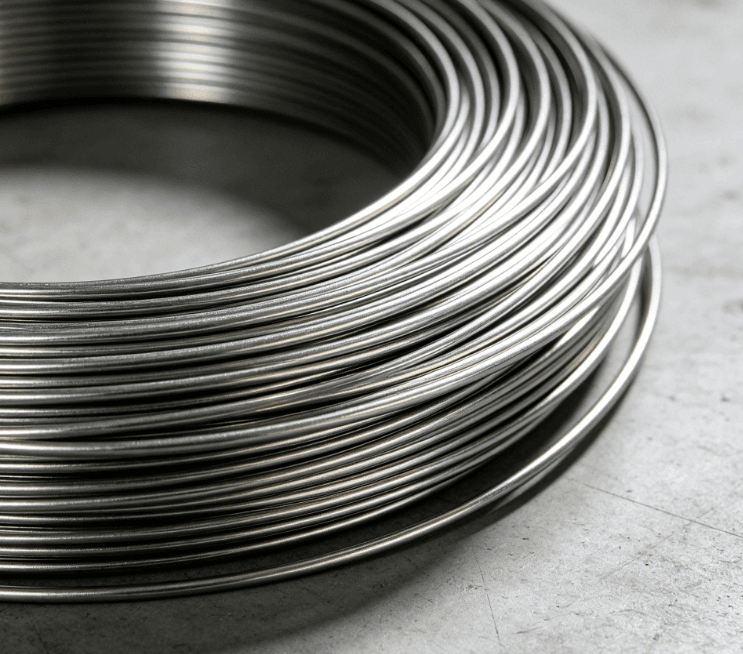
Spiral cold heading wire is an application-specific wire developed to address these pain points. It is far more than simple coiled metal; it is a precision material purpose-built for high-volume fastener production. Every parameter, from dimensional tolerance and surface finish to mechanical properties, is strictly calibrated to match cold heading process requirements, ensuring consistent, reliable forming with every cycle. Whether for standard self-tapping screws, high-strength automotive bolts, or custom engineered fasteners, selecting the right spiral cold heading wire directly impacts production line uptime, scrap rates, and the final delivery quality of finished products.
1. What Exactly Is Spiral Cold Heading Wire?
Let us start with a clear definition: cold heading (also called cold forming) is the core manufacturing process for fasteners. It extrudes metal into shape under high pressure at room temperature, which densifies the grain structure of fasteners, improves their strength, and generates almost no material waste — making it the dominant process for mass production. Cold heading wire is the dedicated feedstock designed for this process, and it must withstand severe plastic deformation during cold heading without defects such as cracking or delamination.
"Spiral" describes the supply form of the wire: it is delivered in continuous coils, commonly referred to as "wire rod" in the industry. Unlike straight-length wire bars, coiled spiral cold heading wire can be fed directly into high-speed cold heading machines for uninterrupted production, eliminating frequent downtime for material changeovers and fully aligning with the cycle of automated production lines. A detail many factories overlook is that coil uniformity and tightness also matter. High-quality spiral cold heading wire will not knot, unravel, or deform locally, preventing feed jams and material misalignment and reducing equipment failures at the source.
That said, it is critical to note that not all coiled cold heading wire qualifies as "fastener-grade spiral cold heading wire". Ordinary coiled wire often only meets basic dimensional requirements, while dedicated cold heading wire undergoes strict control at every stage — from smelting and wire drawing to annealing — to ensure consistent performance across the entire coil, with no risk of the first half passing inspection while the second half fails due to cracking.
2. Core Performance Advantages That Directly Drive Production Efficiency
For production engineers and procurement teams, material grade alone is not enough to evaluate cold heading wire. These key performance indicators are what truly determine process compatibility:
(1) Tight Dimensional Tolerance Control
Cold heading dies are manufactured to extremely high precision. A diameter deviation of just 0.01mm in the wire can cause die jamming, die chipping, or out-of-spec fastener dimensions. Premium spiral cold heading wire holds diameter tolerances within ±0.02mm, with minimal fluctuation along the full coil length. This ensures perfect alignment between feedstock and dies for every cycle, reducing equipment failures and scrap generation from the source.
(2) Uniform, Consistent Surface Quality
Surface scratches, oxide scale, and inclusions on the wire become stress concentration points during cold heading, directly causing screw head cracking and defective thread forming. For this reason, qualified spiral cold heading wire receives specialized surface treatments such as phosphating or copper coating. These treatments reduce friction during cold heading, extend die service life, and prevent forming defects caused by surface flaws. For fasteners that will undergo subsequent electroplating or black oxide finishing, this surface preparation also ensures reliable coating adhesion.
(3) Precise Balance of Ductility and Strength
Many factories have encountered this pitfall: prioritizing fastener strength by selecting overly hard wire, only to see it crack immediately under cold heading pressure. This happens because cold heading wire must satisfy two seemingly conflicting requirements: sufficient ductility to resist cracking during forming, and adequate strength to meet the final mechanical performance standards of the fastener. Spiral cold heading wire achieves this balance through precision annealing processes that refine the wire’s grain structure, keeping ductility and hardness within a controlled range across the entire coil to suit fastener production of varying specifications and strength grades.
3. Fastener Production Scenarios That Require Spiral Cold Heading Wire
Spiral cold heading wire is compatible with nearly all cold-formed fasteners, though different product categories impose different wire requirements:
Self-tapping screws, wood screws, drywall screws: require strong wire ductility to ensure defect-free forming of points and heads. Low-carbon steel cold heading wire with controlled hardness is the standard choice.
High-strength bolts and studs: must meet strict tensile strength requirements. Alloy-grade cold heading wire such as 10B21 or 40Cr is typically used, as it withstands cold forming and delivers required strength after subsequent heat treatment.
Rivets and semi-hollow fasteners: demand exceptional diameter consistency and surface quality. Poor wire quality will cause uneven wall thickness or cracking in the hollow section, compromising riveting performance.
Custom engineered fasteners: such as concrete anchor bolts and heavy machinery fasteners, require custom-specification spiral cold heading wire tailored to the forming process and final strength requirements.
4. Procurement Guidelines to Avoid Common Pitfalls
Based on hands-on production experience, here are practical checkpoints for procurement:
Specify grade and dimensions clearly, not just "cold heading wire": Clearly state whether you require 1018 low-carbon steel, 10B21 boron steel, or 304 stainless steel, along with diameter tolerance and surface treatment requirements, to prevent suppliers from substituting with standard commercial wire.
Inspect coil consistency upon receipt: Check the full coil for knots, unraveling, or local deformation — all of which will cause jams and downtime during high-speed feeding.
Request full Material Test Reports (MTR): Reputable suppliers provide batch-specific reports covering chemical composition, mechanical properties, and dimensional tolerance data, which are the foundation of quality control.
Run small-batch trials before full-scale procurement: Even with perfect documentation, test the wire with your existing dies and process parameters first. Verify that it matches your production line speed and produces defect-free parts to avoid costly large-scale failures.
Closing Note
Many factories treat cold heading wire as a generic consumable, but in reality, it is an invisible core component in fastener manufacturing. A reliable supply of spiral cold heading wire reduces scrap, cuts equipment downtime, and extends die service life — delivering long-term cost savings that far exceed the upfront price difference of the wire itself.
If you are struggling with persistent screw cracking or frequent cold heading machine jams, it may be worth revisiting your wire specifications and quality controls. More often than not, the solution to your production problem lies in this humble coiled wire.